
Introduction
Have you ever looked at a mountain and wondered how something so massive could form grain by grain? That’s the quiet power of accumulation. It rarely makes noise, rarely demands attention, yet it shapes everything from your bank balance to your habits, your relationships, and even your mindset.
In everyday life, accumulation determines who builds wealth and who struggles, who masters skills and who gives up, who feels overwhelmed by clutter and who enjoys clarity. It’s not about dramatic breakthroughs; it’s about steady additions over time. And understanding this concept can transform how you think about progress, success, and even happiness.
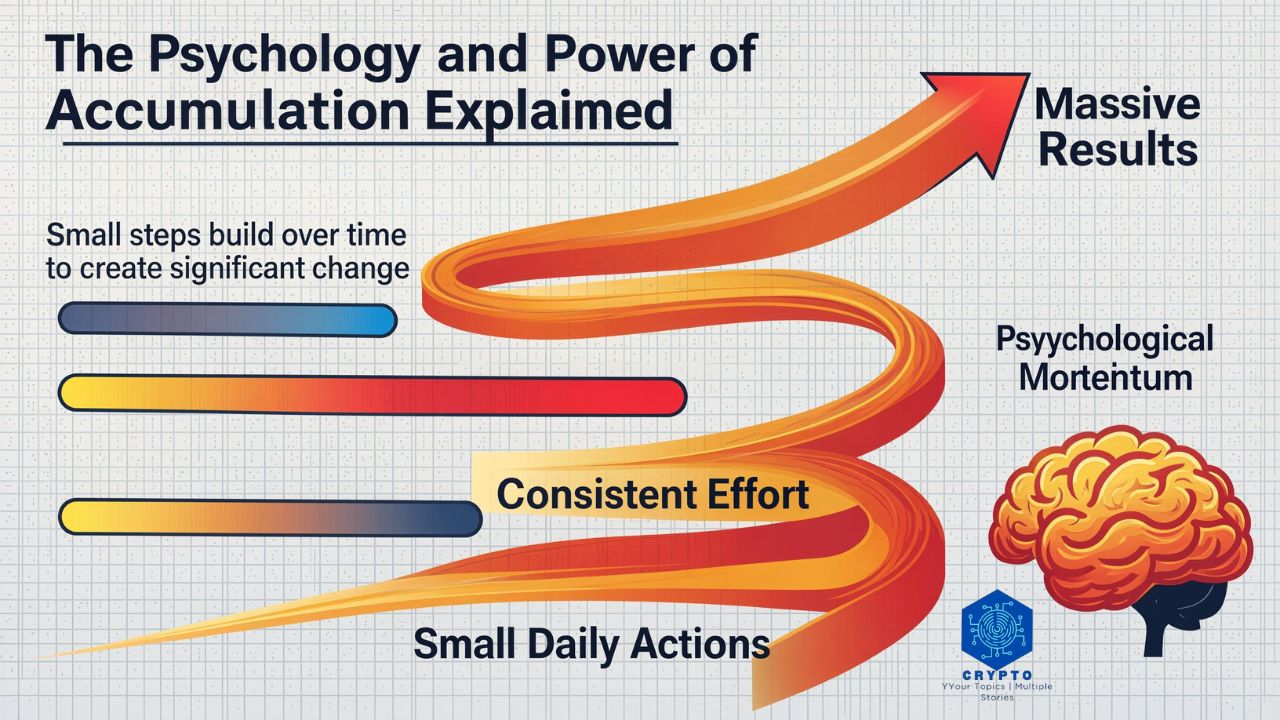
Most people underestimate small actions because they seem insignificant in the moment. But small actions don’t stay small. They stack. They compound. They grow. That is why learning how accumulation works — and how to direct it intentionally — is one of the most powerful lessons you can ever internalize.
What Is Accumulation?
A Clear Definition
At its simplest, accumulation refers to the gradual gathering or increasing of something over time. That “something” can be money, knowledge, experience, possessions, habits, or even stress.
It is not a single event. It is a process. And that process can be positive or negative depending on what is being gathered.


In finance, accumulation might mean reinvesting profits so they grow. In psychology, it might describe how repeated thoughts shape beliefs. In daily life, it might explain why small daily routines lead to major long-term outcomes.
Why Small Additions Matter
The real magic lies in incremental growth. Consider these examples:
- Saving $5 daily equals $1,825 per year.
- Reading 10 pages daily equals 3,650 pages annually — roughly 12–15 books.
- Exercising 20 minutes daily adds up to over 120 hours per year.
None of these actions feel life-changing in a single day. But through steady accumulation, they reshape your reality.
The Psychology Behind Accumulation
How the Brain Understands Growth
Humans are wired for short-term rewards. Our brains prefer immediate gratification over delayed benefits. That’s why it’s easier to binge-watch a show than to invest money for retirement.
However, long-term progress depends on trusting gradual growth. When we understand that small efforts build meaningful results, our behavior changes.
Repeated actions create neural pathways. Over time, those pathways strengthen. This is how habits form. The accumulation of small behaviors eventually becomes automatic identity.
Emotional Accumulation: The Hidden Factor
It’s not only wealth or skills that grow. Emotions accumulate too.
- Unresolved stress compounds into burnout.
- Small acts of kindness build trust.
- Repeated criticism damages confidence.
Being aware of emotional stacking helps you intervene early. You can redirect patterns before they become overwhelming.
Accumulation in Finance and Wealth Building
Money is perhaps the most widely discussed area where accumulation plays a defining role.
Compound Growth Explained
When earnings generate additional earnings, growth accelerates. Interest earns interest. Investments generate returns that are reinvested. Over time, growth becomes exponential rather than linear.

4
A simple example:
- $10,000 invested at 8% annually grows to over $21,500 in 10 years.
- Leave it for 20 years, and it exceeds $46,000.
- At 30 years, it approaches $100,000.
The difference isn’t effort — it’s time.
Wealth Is Rarely Built Overnight
Most financially successful individuals rely on:
- Consistent saving
- Reinvestment of profits
- Long-term thinking
- Patience during market cycles
Sudden windfalls are rare. Steady accumulation of assets is far more common among sustainable wealth builders.
Accumulation of Knowledge and Skills
Mastery Through Repetition
No one becomes an expert in a day. Expertise forms from the stacking of lessons, practice sessions, mistakes, and refinements.
Think of learning a language. A single vocabulary word feels minor. But 10 words per day equals 3,650 words in a year — enough for conversational fluency.
Skill development works the same way:
- Musicians practice scales.
- Writers draft daily.
- Athletes train consistently.
Each small session contributes to long-term competence.
Micro-Improvement Strategy
A powerful concept is improving by 1% daily. It sounds insignificant. But over time, micro-gains produce dramatic outcomes.
Small daily improvements compound into transformation.
The Dark Side of Accumulation
Not all growth is beneficial.
Clutter and Material Overload
Possessions accumulate easily. Clothes pile up. Digital files multiply. Notifications stack. Before long, mental clarity suffers.


Physical clutter often reflects unintentional accumulation. Without periodic review, small additions become overwhelming.
Debt and Financial Pressure
Just as investments compound positively, debt compounds negatively. Interest adds to principal. Late fees increase balances. Over time, financial strain intensifies.
The lesson is simple: accumulation is neutral. It amplifies direction.
Intentional Accumulation: How to Make It Work for You
Step 1: Identify What You Want to Grow
Ask yourself:
- Do I want to build wealth?
- Improve health?
- Strengthen relationships?
- Expand knowledge?
Clarity determines direction.
Step 2: Focus on Daily Inputs
Instead of obsessing over outcomes, control small daily actions.
Examples:
- Save automatically.
- Read before bed.
- Walk after dinner.
- Express gratitude daily.
Consistency fuels accumulation more than intensity.
Step 3: Remove Negative Inputs
Reduce harmful stacking:
- Limit unnecessary expenses.
- Avoid toxic environments.
- Manage stress early.
- Declutter regularly.
Prevention is easier than reversal.
Accumulation in Personal Relationships
Trust doesn’t appear overnight. It builds through:
- Reliability
- Honest communication
- Shared experiences
- Small consistent gestures
Likewise, resentment grows from repeated neglect or conflict. Healthy relationships rely on positive emotional stacking.
Regular appreciation and attentive listening prevent harmful patterns from forming.
Digital Age and Information Accumulation
Today, data surrounds us constantly.
- Emails
- Social media feeds
- News alerts
- Messages
Information accumulation can overwhelm attention and productivity.
Strategies to manage it include:
- Scheduled email checks
- Social media boundaries
- Digital decluttering
- Mindful content consumption
Intentional filtering preserves mental clarity.
Long-Term Success and Strategic Patience
True progress often looks invisible at first.
The early stages of accumulation may show little visible change. But beneath the surface, foundations are forming.
Just like planting a tree:
- Roots grow before branches.
- Strength develops before height.
- Stability forms before visibility.
Patience is not passive. It’s disciplined persistence.
FAQ
Frequently Asked Questions
What does accumulation mean in simple terms?
It means gradually gathering or increasing something over time, whether money, knowledge, habits, or possessions.
Why is accumulation important in personal finance?
Because steady saving and reinvesting allow money to grow exponentially through compound returns.
Can accumulation be negative?
Yes. Debt, clutter, stress, and unhealthy habits can also grow gradually if not managed.
How can I start using accumulation to improve my life?
Focus on small daily improvements and remain consistent over months and years.
Is rapid success better than slow growth?
Rapid success is rare and often unstable. Slow, steady growth tends to be more sustainable.
How does accumulation relate to habits?
Habits form through repeated behaviors. Small actions repeated daily create lasting change.
Does accumulation apply to mental health?
Absolutely. Positive routines build resilience, while unmanaged stress can compound negatively.
How long does it take to see results?
It varies. Some changes appear in weeks, others in years. The key is consistency.
Conclusion
Life rarely changes in dramatic leaps. More often, it shifts quietly through gradual addition. Whether you are building wealth, learning new skills, strengthening relationships, or improving health, steady progress outperforms bursts of intensity.
The real question isn’t whether accumulation is happening — it always is. The question is: what are you choosing to stack?
Every day offers small opportunities. A saved dollar. A kind word. A page read. A walk taken. Over time, these seemingly minor actions shape the architecture of your life.
When you understand and respect the quiet power of accumulation, you stop chasing shortcuts and start building foundations. And foundations, unlike shortcuts, last.